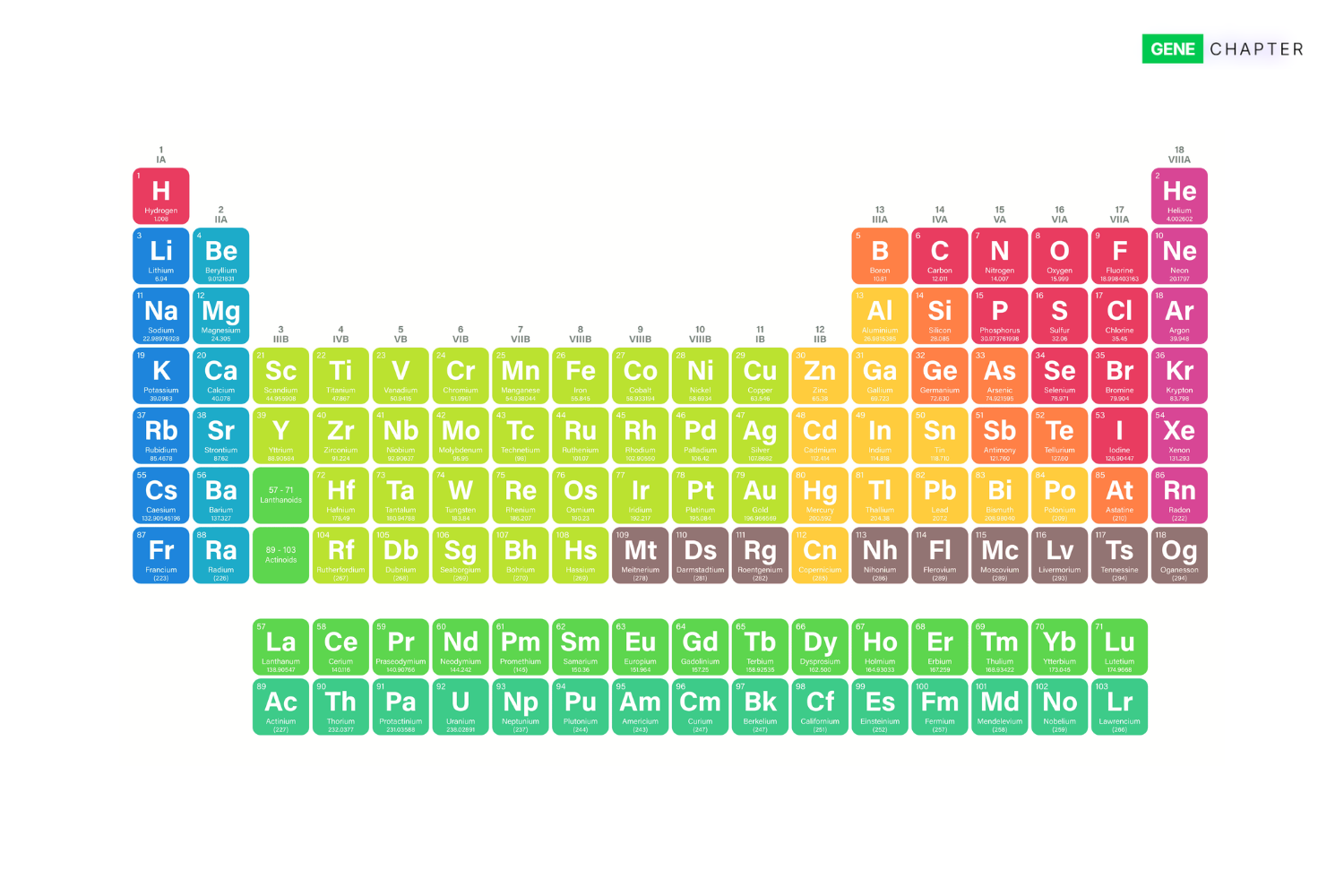
The modern day periodic table contains 118 known elements. The first 20 elements starting from hydrogen to calcium are very important for understanding the basics of chemistry.
In this article we will take a brief look at the first 20 chemical elements of the periodic table along with their symbol and atomic number. Apart from this guide we also provided their electron configuration.
Electronic configuration is the arrangement of electrons in the different shells around the nucleus of the atom. The first shell is called K, the second is L, third M and fourth N. For example sodium has an atomic number of 11. Its electronic configuration is 2, 8, 1. This means K shell has 2 electrons, L shell has 8 electrons and M shell has 1 electron. Here is the electronic configuration of the first 20 elements.
In this article we will take a brief look at the first 20 chemical elements of the periodic table along with their symbol and atomic number. Apart from this guide we also provided their electron configuration.
Atomic Number of First 20 Elements
The atomic number of elements provides the details of the number of protons inside the nuclei of the atom and also the number of electrons that surround these nuclei. For example: the atomic number of calcium 20. Which means the nucleus contains 20 protons and is surrounded by 20 electrons. The atomic number of an atom is calculated by the number of electrons it contains and also this number is used to find the electronic configuration of the element.| Atomic Number | Element | Symbol |
| 1 | Hydrogen | H |
| 2 | Helium | He |
| 3 | Lithium | Li |
| 4 | Beryllium | Be |
| 5 | Boron | B |
| 6 | Carbon | C |
| 7 | Nitrogen | N |
| 8 | Oxygen | O |
| 9 | Fluorine | F |
| 10 | Neon | Ne |
| 11 | Sodium | Na |
| 12 | Magnesium | Mg |
| 13 | Aluminium | Al |
| 14 | Silicon | Si |
| 15 | Phosphorus | P |
| 16 | Sulphur | S |
| 17 | Chlorine | Cl |
| 18 | Argon | Ar |
| 19 | Potassium | K |
| 20 | Calcium | Ca |
Electronic Configuration of 20 Elements
Electronic configuration is the arrangement of electrons in the different shells around the nucleus of the atom. The first shell is called K, the second is L, third M and fourth N. For example sodium has an atomic number of 11. Its electronic configuration is 2, 8, 1. This means K shell has 2 electrons, L shell has 8 electrons and M shell has 1 electron. Here is the electronic configuration of the first 20 elements.
| Atomic Number | Element | Configuration |
| 1 | Hydrogen | 1s¹ |
| 2 | Helium | 1s² |
| 3 | Lithium | 1s² 2s¹ |
| 4 | Beryllium | 1s² 2s² |
| 5 | Boron | 1s² 2s² 2p¹ |
| 6 | Carbon | 1s² 2s² 2p² |
| 7 | Nitrogen | 1s² 2s² 2p³ |
| 8 | Oxygen | 1s² 2s² 2p⁴ |
| 9 | Fluorine | 1s² 2s² 2p⁵ |
| 10 | Neon | 1s² 2s² 2p⁶ |
| 11 | Sodium | 1s² 2s² 2p⁶ 3s¹ |
| 12 | Magnesium | 1s² 2s² 2p⁶ 3s² |
| 13 | Aluminium | 1s² 2s² 2p⁶ 3s² 3p¹ |
| 14 | Silicon | 1s² 2s² 2p⁶ 3s² 3p² |
| 15 | Phosphorus | 1s² 2s² 2p⁶ 3s² 3p³ |
| 16 | Sulphur | 1s² 2s² 2p⁶ 3s² 3p⁴ |
| 17 | Chlorine | 1s² 2s² 2p⁶ 3s² 3p⁵ |
| 18 | Argon | 1s² 2s² 2p⁶ 3s² 3p⁶ |
| 19 | Potassium | 1s² 2s² 2p⁶ 3s² 3p⁶ 4s¹ |
| 20 | Calcium | 1s² 2s² 2p⁶ 3s² 3p⁶ 4s² |