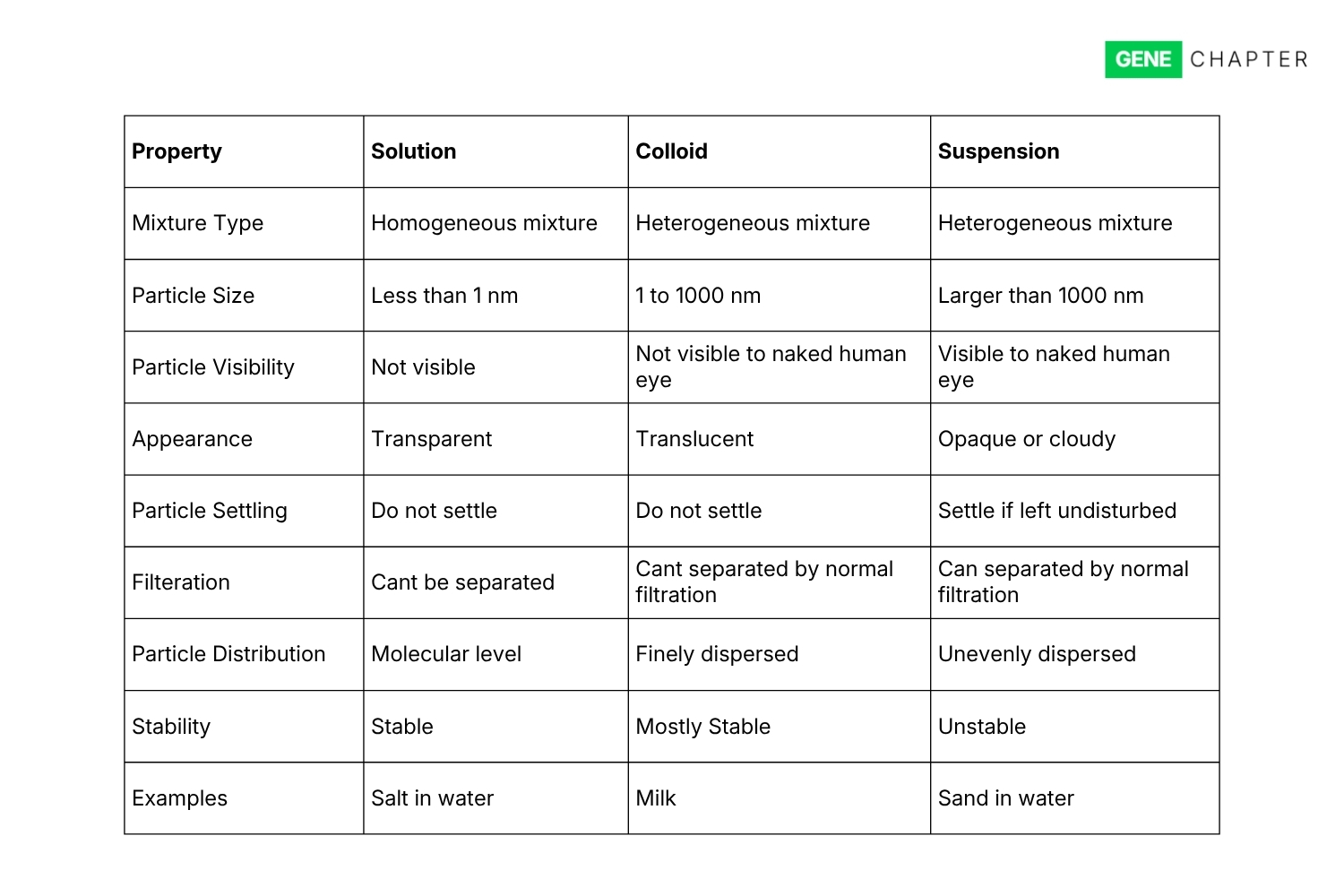
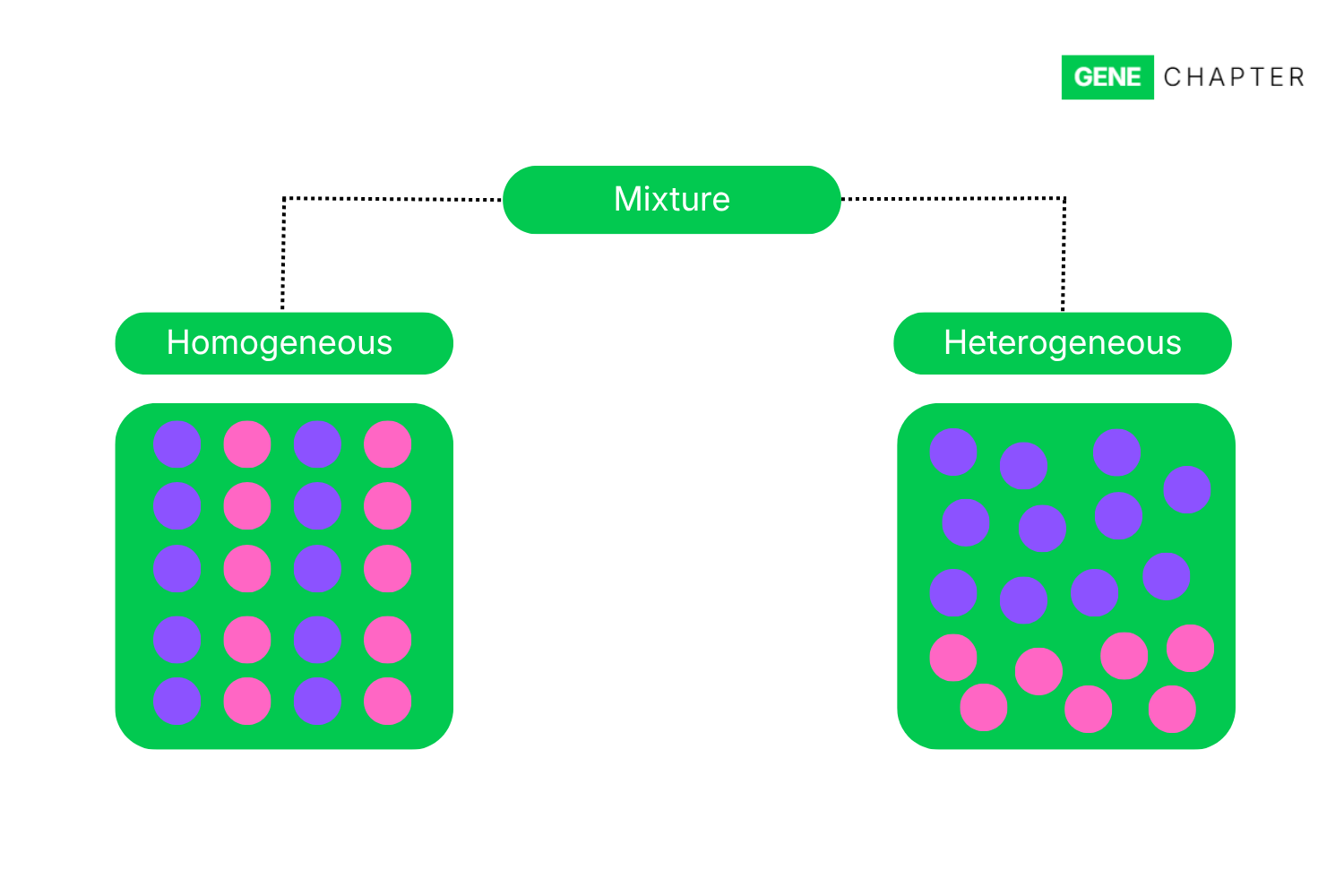
In chemistry, a suspension is a heterogeneous mixture where solid particles are dispersed throughout the liquid. In suspension particles do not dissolve but dispersed in the medium creating an opaque or cloudy appearance and particles are larger than 1000 nanometers (nm) in diameter. Another important nature of the suspension is dispersed particles are large enough for sedimentation.
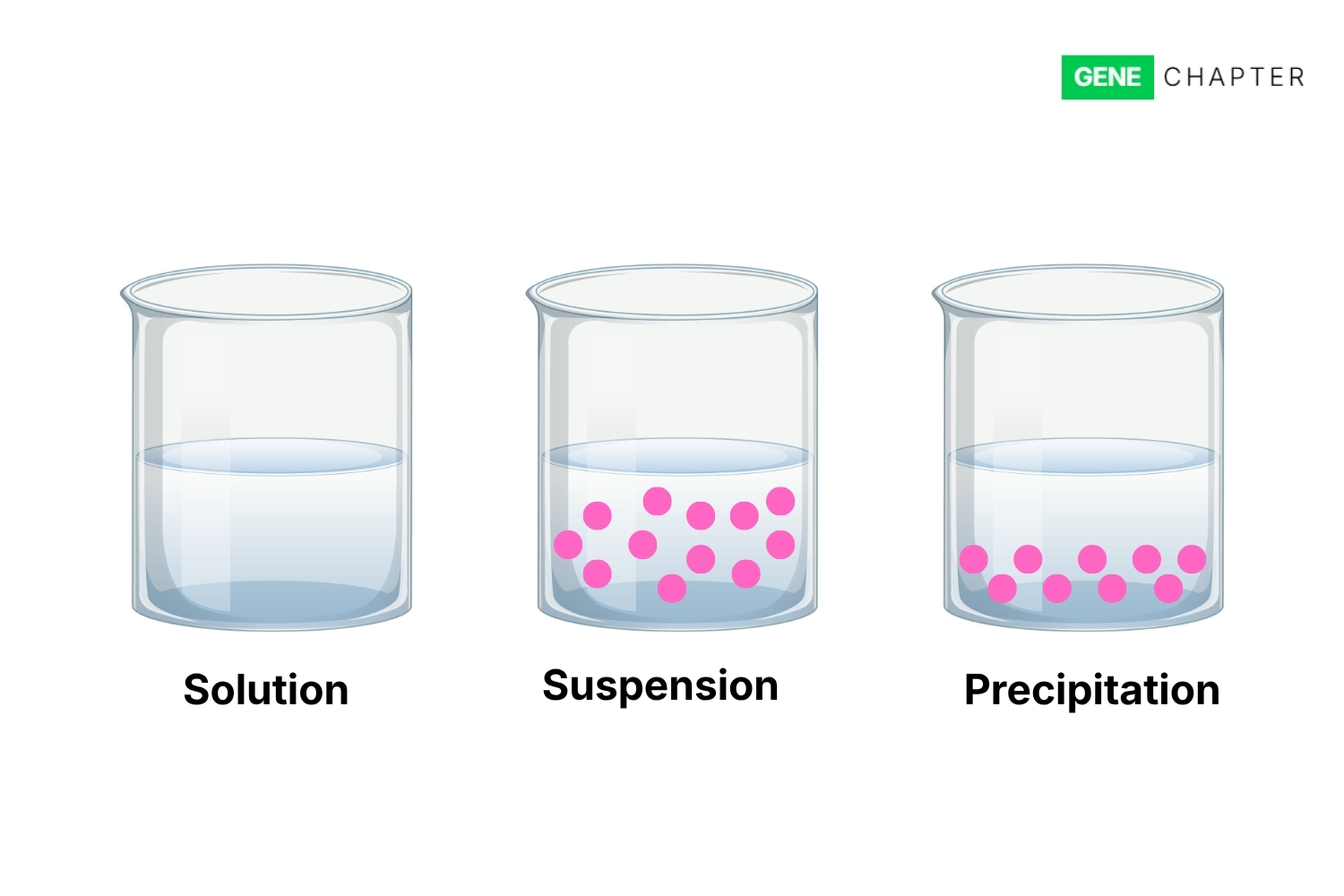
Properties of Suspension
Heterogeneous Mixture: Suspension is a heterogeneous mixture, its composition is not uniform throughout.
Insoluble Particles: The particles do not dissolve in the medium. They remain dispersed throughout the medium.
Large Particles: Particles in the suspensions are mostly larger than 1000 nm. However it is a general characterization not an sole defining characterization of the suspension.
Opaque or cloudy: Particles in the medium do not dissolve, they dispersed creating an opaque and cloudy appearance.
Sedimentation: When suspension is left undisturbed for a few hours, dispersed particles settle at the bottom under the influence of gravity.
Separated via filtration: Dispersed particles can be separated from the medium by original filtration.
Re-dispersed particles: The settled particles can be dispersed again by shaking vigorously with hand or string the medium.
Examples of Suspension
Here are some well known examples for suspension; Muddy water, Sand in water, Flour in water, Milk of magnesia.
Difference between Solution, Suspension and Colloid