Difference between Osmosis and Diffusion
Gobinath Thilagar
3 min read
Osmosis and diffusion are two important processes which help substances move from one place to another. Diffusion process in the movement of particles from the high concentration area to lower concentration area and Osmosis is the movement of water across a semipermeable membrane from a dilute solution to more concentrated solution.
In this article we will understand clearly about what is osmosis, what is diffusion and what is the difference between osmosis and diffusion.
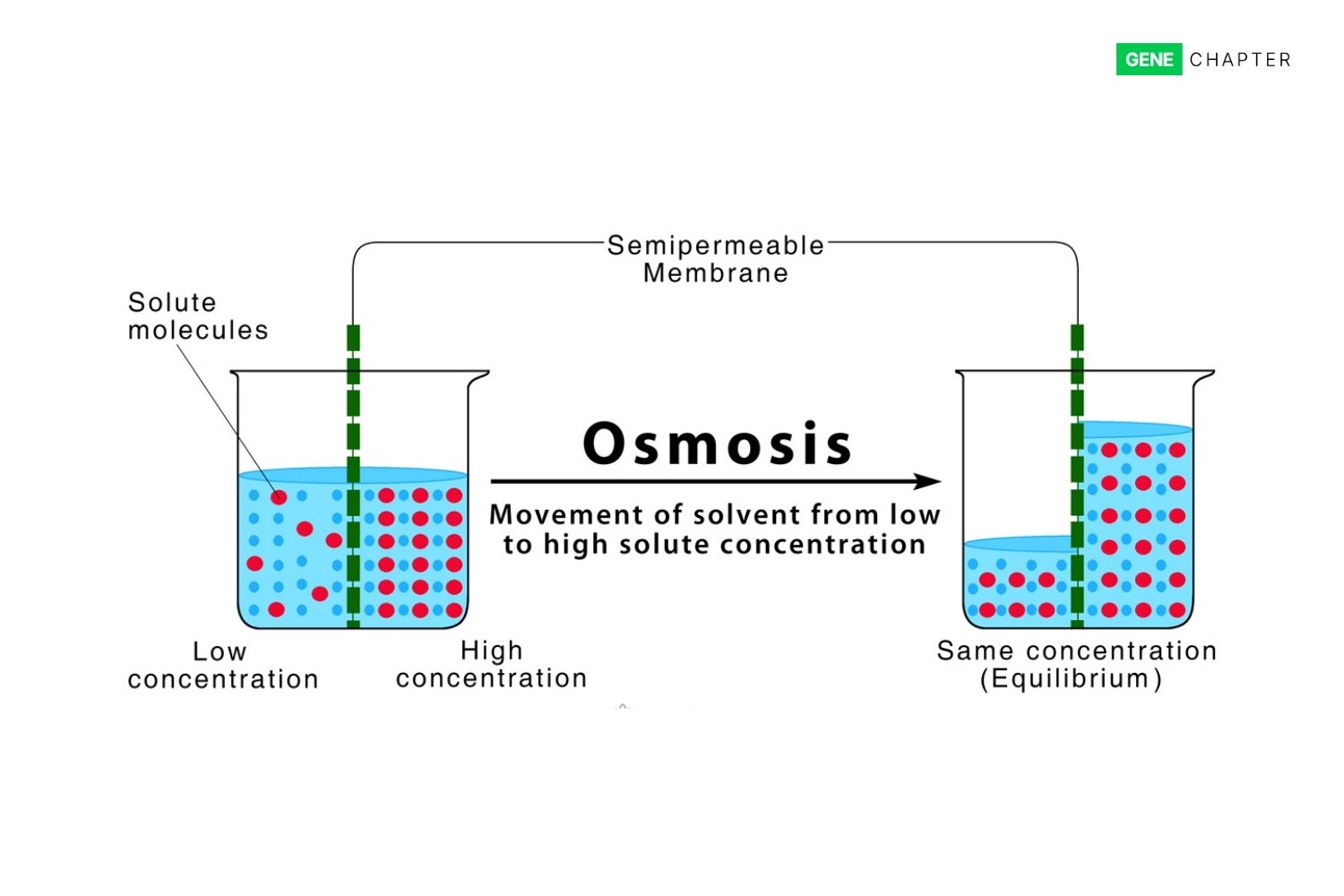
Osmosis is an important passive biological process. During the process of osmosis, the solvent (mostly water) from the side with the lower solute concentration crosses the semipermeable membrane to the side with higher solute concentration. This process happens until both sides have an equal solute concentration.
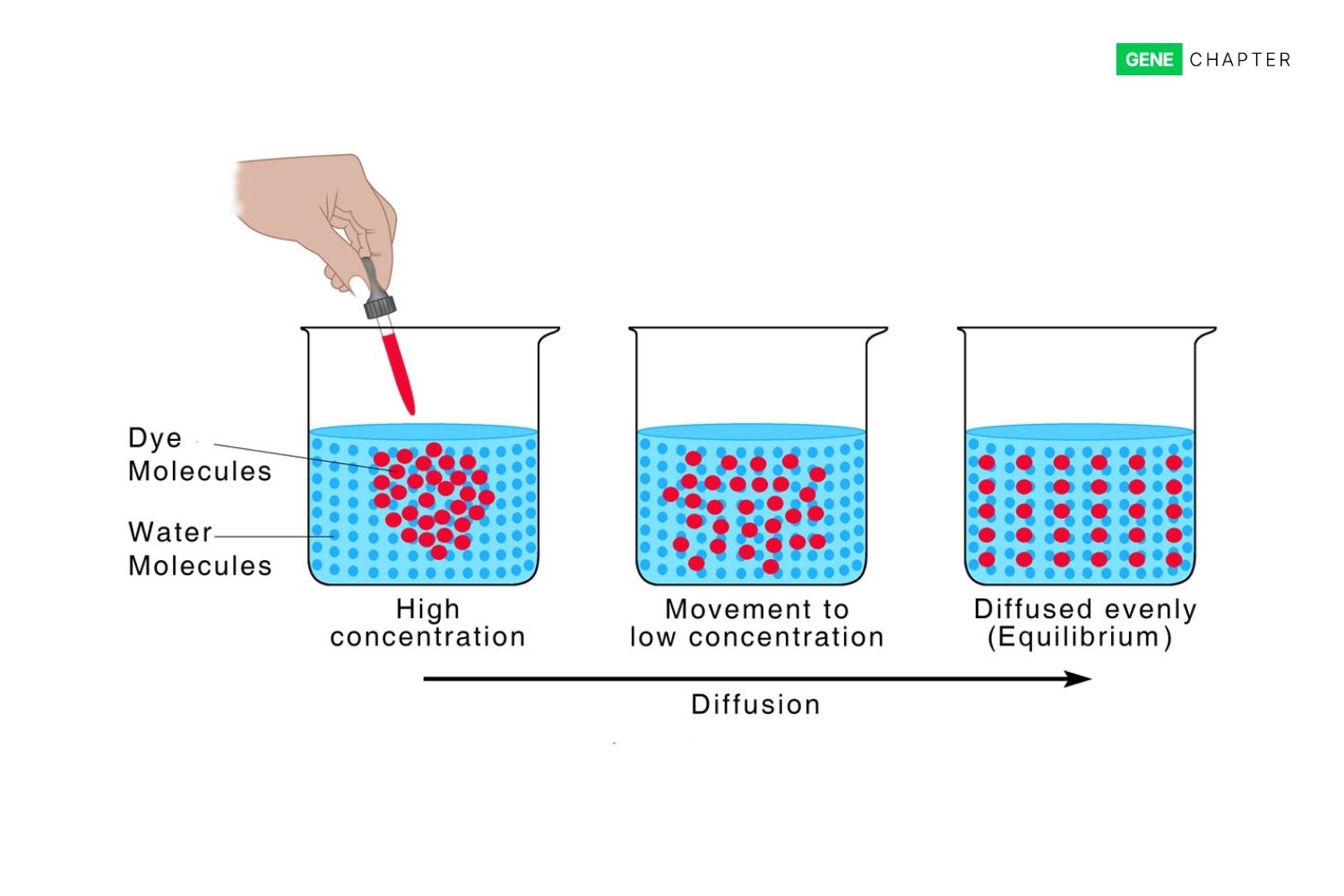
Diffusion is the natural process in which particles move from an area where they are in higher concentration to a region where they are present in lower concentration. During diffusion particles move randomly and gradually spread out until they are evenly distributed. Like osmosis this process also doesn't require any energy.
In this article we will understand clearly about what is osmosis, what is diffusion and what is the difference between osmosis and diffusion.
What is Osmosis?
Osmosis is an important passive biological process. During the process of osmosis, the solvent (mostly water) from the side with the lower solute concentration crosses the semipermeable membrane to the side with higher solute concentration. This process happens until both sides have an equal solute concentration.
Figure 1: Osmosis across a semipermeable membrane. Image Source: sciencefacts.net
What is Diffusion?
Diffusion is the natural process in which particles move from an area where they are in higher concentration to a region where they are present in lower concentration. During diffusion particles move randomly and gradually spread out until they are evenly distributed. Like osmosis this process also doesn't require any energy.
Difference between Osmosis and Diffusion
| Osmosis | Diffusion |
| Definition | |
| Movement of solvent particles across a semipermeable membrane from a region of low solute concentration to one of high solute concentration | Movement of particles from a region of higher concentration to a region of lower concentration |
| Nature of process | |
| Special case of diffusion (of water) | General process |
| Types | |
| Endosmosis (water enters the cell) and exosmosis (water leaves the cell) | Simple diffusion and facilitated diffusion (through carrier or channel proteins) |
| Medium | |
| Liquids only | Solids, liquids and gases |
| Membrane | |
| Semipermeable membrane required | Not required |
| Substance moved | |
| Only solvent molecules; water is the main solvent | Solute and solvent molecules; any type of particle; water not necessary |
| Direction of flow | |
| Net movement in one direction, through the membrane | Particles spread in all directions |
| Energy required | |
| None (passive) | None (passive) |
| Depends on | |
| Number of solute particles dissolved in the solvent (solute potential) | Concentration gradient; does not depend on solute, pressure or water potential |
| Pressure | |
| Osmotic and turgor pressure involved; can be stopped or reversed by applying extra pressure on the solution side | No significant pressure involved; continues as long as a concentration gradient exists |
| Factors affecting rate | |
| Solute concentration difference, temperature, pressure applied, membrane permeability | Concentration gradient, temperature, particle size, medium density, distance, surface area |
| End point | |
| Stops when water potential is balanced on both sides (or opposed by pressure) | Particles become evenly distributed and fill the available space |
| Role in living things | |
| Water uptake by root hairs | Gas exchange in lungs and leaves, absorption of digested food |
| Applications | |
| Reverse osmosis in water purification, preserving food with salt or sugar, dialysis | Drug delivery through skin patches, spread of aromas |
| Example | |
| Raisins swelling when soaked in water | Sugar dissolving and spreading in tea |