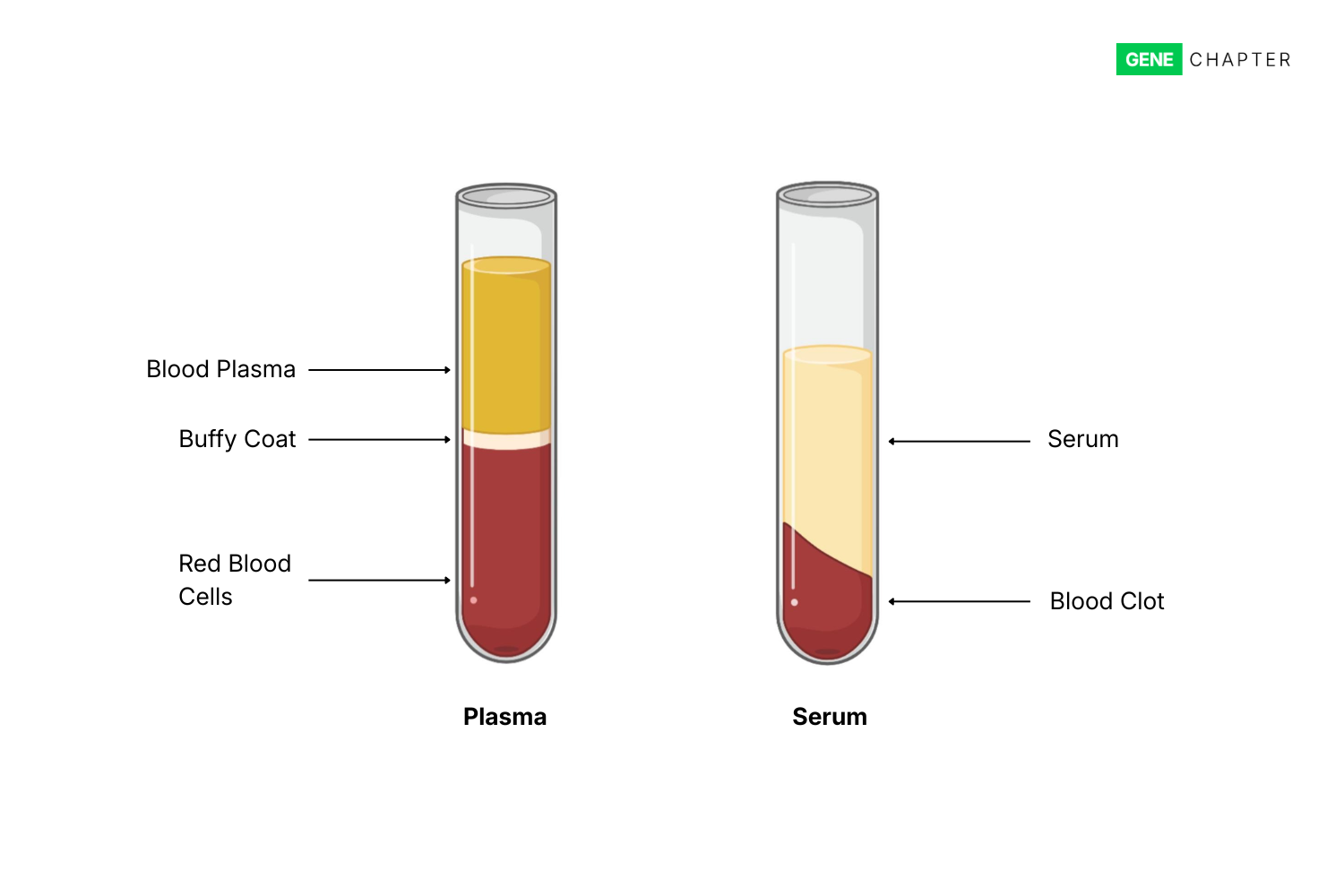
Plasma and Serum are two important components of the blood and these are commonly used in the clinical labs and medical research. Plasma is the liquid portion of blood that helps blood flow through your body. Serum is defined as a liquid collected after blood has clotted.
In this article we will discuss more about the definition of plasma, definition of serum and difference between plasma and serum.
Definition of Plasma
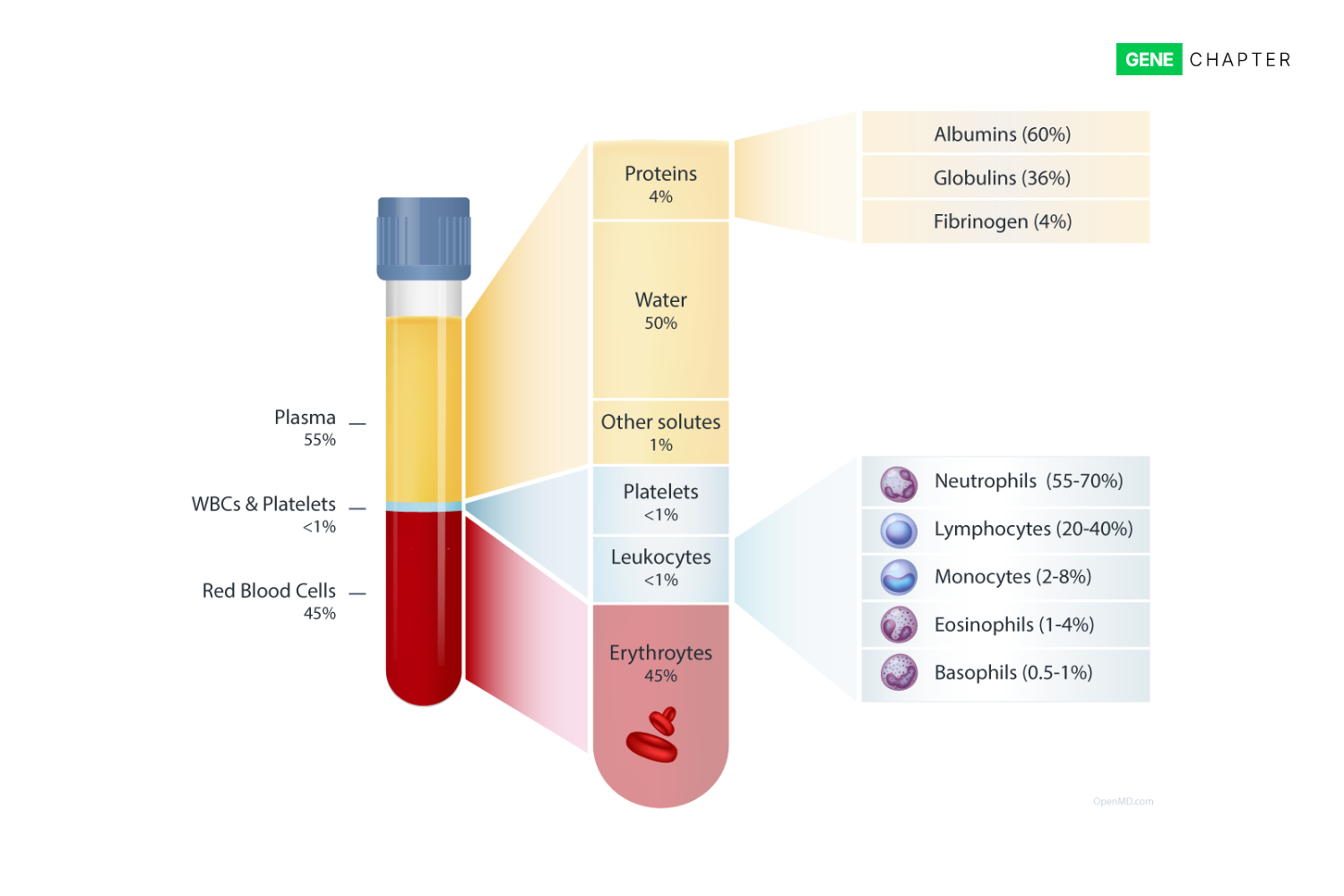
Blood plasma is around 55% of the whole blood volume and the rest of the 45% is a combination of red blood cells, white blood cells and platelets. Plasma is made up of 92% of water, 7% of essential proteins such as albumin, gamma globulin, and anti-hemophilic factor, and 1% mineral salts, sugars, fats, hormones, and vitamins.
Blood plasma is very important for body function, it helps the blood circulate, deliver nutrients to different parts of the body, supports immunity, stops bleeding and removes waste. The blood plasma is separated from the whole blood through centrifugation.
Image: Image shows the components of blood plasma. Reference: openmd.com
Definition of Serum
Serum is the un-diluted part of the blood which lacks the clotting factors. So, serum is collected after blood’s coagulation. Serum includes antibodies, antigens, electrolytes, hormones.
Blood serum is collected from the whole blood by allowing it to clot for 20 to 30 minutes. Then the clotted blood is centrifuged, which separates the clear liquid from the blood clot. This clear yellowish liquid is called serum.
Difference between Plasma and Serum
Plasma
Serum
Definition
The liquid portion of blood that contains blood cells and clotting factors.
The clear liquid obtained after blood has clotted and the clot has been removed.
Blood collection
Blood is collected in a tube containing an anticoagulant.
Blood is collected without an anticoagulant.
Formation
Obtained from un-clotted blood.
Obtained from clotted blood.
Clotting factors
Contains most clotting factors.
Lacks fibrinogen and most clotting factors.
Fibrinogen
Present.
Absent or greatly reduced during clotting.
Separation
Separated by centrifuging anticoagulated blood.
Blood is first allowed to clot and then centrifuged to obtain serum.
Time required
Generally faster to prepare.
Takes longer because clotting must occur first.
Density
Approximately 1.025–1.029 g/mL.
Approximately 1.024–1.028 g/mL.
Composition (%)
Approximately 91–92% water, 6–8% proteins, and 1–2% other solutes.
Approximately 91–92% water, 6–8% proteins, and 1–2% other solutes; lacks fibrinogen.
Water content
Approximately 91–92%.
Approximately 91–92%.
Protein content
Approximately 6–8%, including albumin, globulins, fibrinogen, and other proteins.
Approximately 6–8%, mainly albumin and globulins; fibrinogen is absent.
Fibrinogen proportion
Approximately 0.2–0.4% of plasma.
~0%; fibrinogen is converted to fibrin during clotting.
Other solutes
Approximately 1–2%: electrolytes, nutrients, hormones, gases, and waste products.
Approximately 1–2%: electrolytes, nutrients, hormones, gases, and waste products.
Proportion in blood
Makes up approximately 55% of blood volume.
Does not have a fixed proportion of total blood volume because it is derived after clotting.
Laboratory use
Commonly used for coagulation studies, biochemical tests, and some specialized tests.
Commonly used for biochemical, serological, immunological, and hormonal tests.
Therapeutic use
Plasma can be used for plasma transfusion and replacement of clotting factors.