The xanthoproteic test is a qualitative biochemical test used for detection of aromatic amino acids. It is mainly used to identify amino acids with aromatic rings particularly tyrosine and tryptophan, phenylalanine may give weaker positive reactions.
1. Add 1 mL of the sample solution in a clean dry test tube. Add 1 mL of concentrated nitric acid in the test tube.
2. Allow the test tubes to cool down to room temperature. If the sample solution has a protein, white color precipitate might develop due to denaturation of proteins.
3. Then add 1 mL of 40% NaOH solution and observe the test tube for color change.
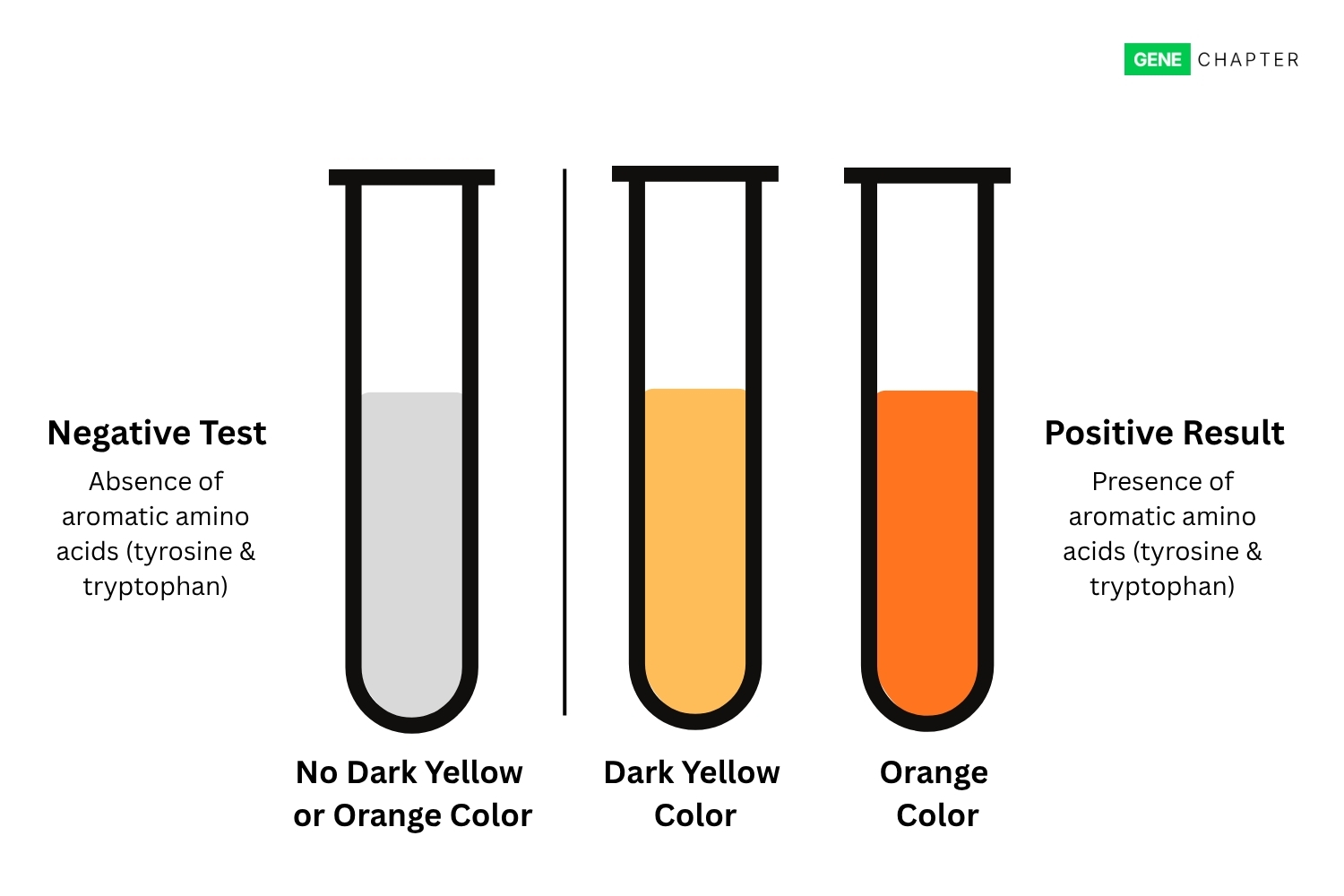
The appearance of deep/dark yellow or orange colored solutions represents the positive result. This indicates the presence of aromatic amino acid in the protein sample.
The absence of a deep/dark yellow or orange color solution represents a negative test. This indicates the absence of aromatic amino acid in the protein sample.
Xanthoproteic test is used to detect the presence of aromatic amino acids residues, especially tyrosine and tryptophan in protein samples.
Xanthoproteic test is used in qualitative protein analysis to find whether a protein sample contains aromatic amino acids or not.
The test indicates the presence of aromatic amino acids, but it cannot specify which amino acid individually.
This test is a strictly qualitative test which only indicates the presence or absence of aromatic amino acid. It cannot help you find the concentration of amino acid in the protein sample.
Aromatic amino acid phenylalanine contains an aromatic ring, but it generally gives a weaker reaction than tyrosine and tryptophan, making the detection less reliable.
This test is called xanthoproteic test because the yellow color compound forms when protein containing aromatic amino acids reacts with concentrated nitric acid. The “Xantho” is derived from the Greek word xanthos which means “Yellow”. The “proteic” means protein or protein related compound. Thus the name xanthoproteic test.
The reaction of the Xanthoproteic is based on the nitration of aromatic amino acids by concentrated nitric acid. The aromatic amino acids such as tyrosine, tryptophan, phenylalanine undergo nitration.
When concentrated nitric acid is added to the protein sample containing aromatic amino acids, nitric acid introducts a nitro group (-NO2) to their aromatic rings. This process is called nitration and during nitration it produces yellow-color nitro derivatives.
In the next step, when an alkali medium such as NaOH is added, it makes the solution alkaline. The nitrated compounds undergo ionization, changing their electron structure. This makes the compound absorb light differently, so the yellow color appears orange.
Principle of Xanthoproteic Test
The reaction of the Xanthoproteic is based on the nitration of aromatic amino acids by concentrated nitric acid. The aromatic amino acids such as tyrosine, tryptophan, phenylalanine undergo nitration.
When concentrated nitric acid is added to the protein sample containing aromatic amino acids, nitric acid introducts a nitro group (-NO2) to their aromatic rings. This process is called nitration and during nitration it produces yellow-color nitro derivatives.
Aromatic amino acid + HNO3 -> Nitro derivative (Yellow) + H2O
In the next step, when an alkali medium such as NaOH is added, it makes the solution alkaline. The nitrated compounds undergo ionization, changing their electron structure. This makes the compound absorb light differently, so the yellow color appears orange.
Procedure of Xanthoproteic Test
1. Add 1 mL of the sample solution in a clean dry test tube. Add 1 mL of concentrated nitric acid in the test tube.
2. Allow the test tubes to cool down to room temperature. If the sample solution has a protein, white color precipitate might develop due to denaturation of proteins.
3. Then add 1 mL of 40% NaOH solution and observe the test tube for color change.
Result of Xanthoproteic Test
The appearance of deep/dark yellow or orange colored solutions represents the positive result. This indicates the presence of aromatic amino acid in the protein sample.
The absence of a deep/dark yellow or orange color solution represents a negative test. This indicates the absence of aromatic amino acid in the protein sample.
Applications of Xanthoproteic Test
Xanthoproteic test is used to detect the presence of aromatic amino acids residues, especially tyrosine and tryptophan in protein samples.
Xanthoproteic test is used in qualitative protein analysis to find whether a protein sample contains aromatic amino acids or not.
Limitations of Xanthoproteic Test
The test indicates the presence of aromatic amino acids, but it cannot specify which amino acid individually.
This test is a strictly qualitative test which only indicates the presence or absence of aromatic amino acid. It cannot help you find the concentration of amino acid in the protein sample.
Aromatic amino acid phenylalanine contains an aromatic ring, but it generally gives a weaker reaction than tyrosine and tryptophan, making the detection less reliable.