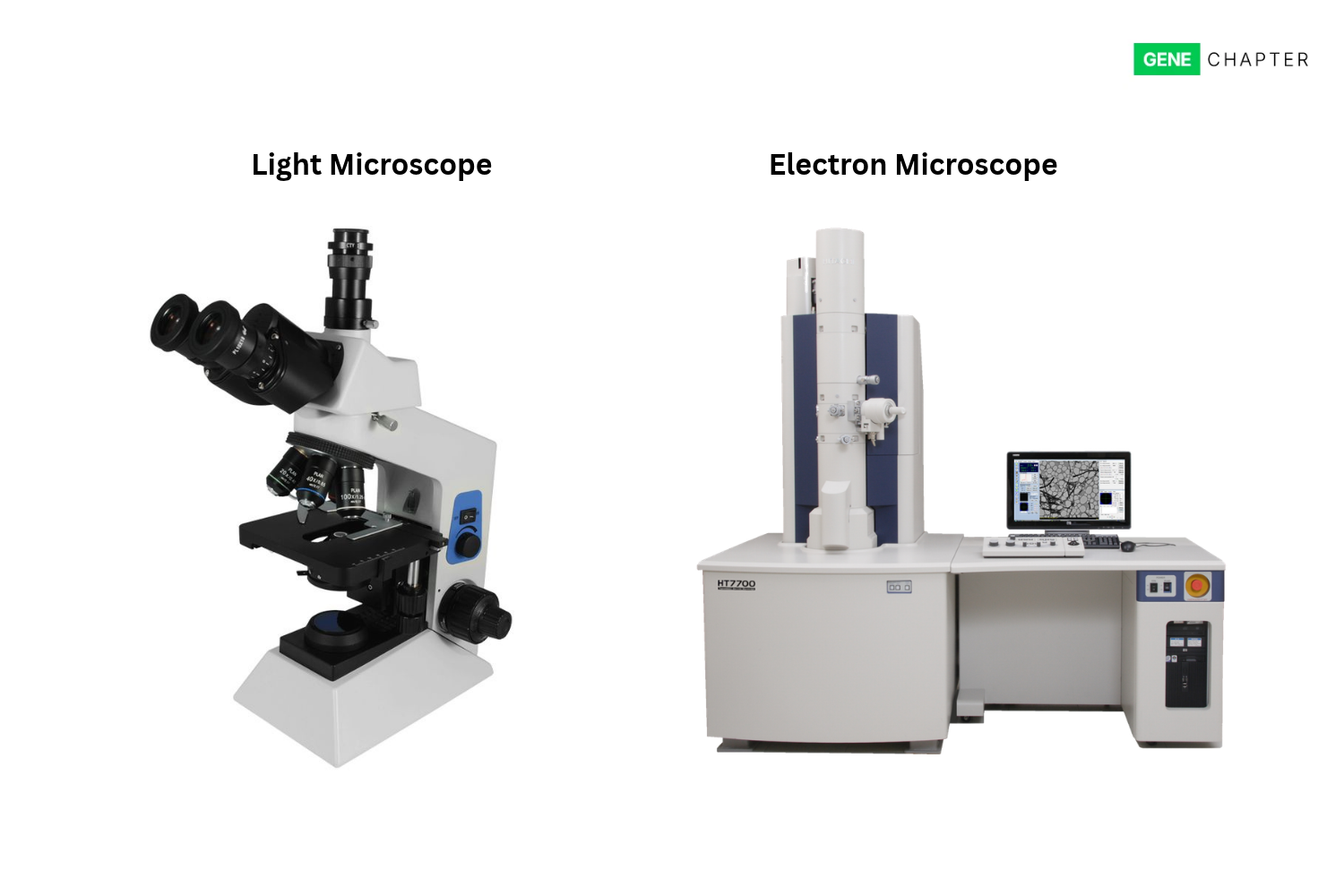
Simple microscope and compound microscope are two types of light microscopes that mainly differ based on their lens and magnification system. A simple microscope uses a single lens and compound microscope uses two or more lenses to produce more magnification and clear visibility of the specimen.
In this article, we will discuss what is a simple microscope and compound microscope, and the difference between a simple and compound microscope.
A simple microscope is a basic optical instrument which uses a single convex lens with a short focal length to produce a magnified image of a small object. Simple microscopes use a biconvex lens to magnify the image of a specimen. Most common simple microscopes have a 10x magnification power.
A compound microscope is a high power (microscope with higher magnification) microscope that uses more than the lens in the microscope. Typically a compound microscope has objective lenses (usually 4X, 10X, 40X and 100X) and these are further enhanced by eyepiece lens (usually 10X).
A compound microscope uses objective lenses and eyepiece lenses to create a higher magnification - 40X, 100X, 400X and 1000X. A compound microscope is widely considered as one of the standard microscopes that can be used for several general purposes.
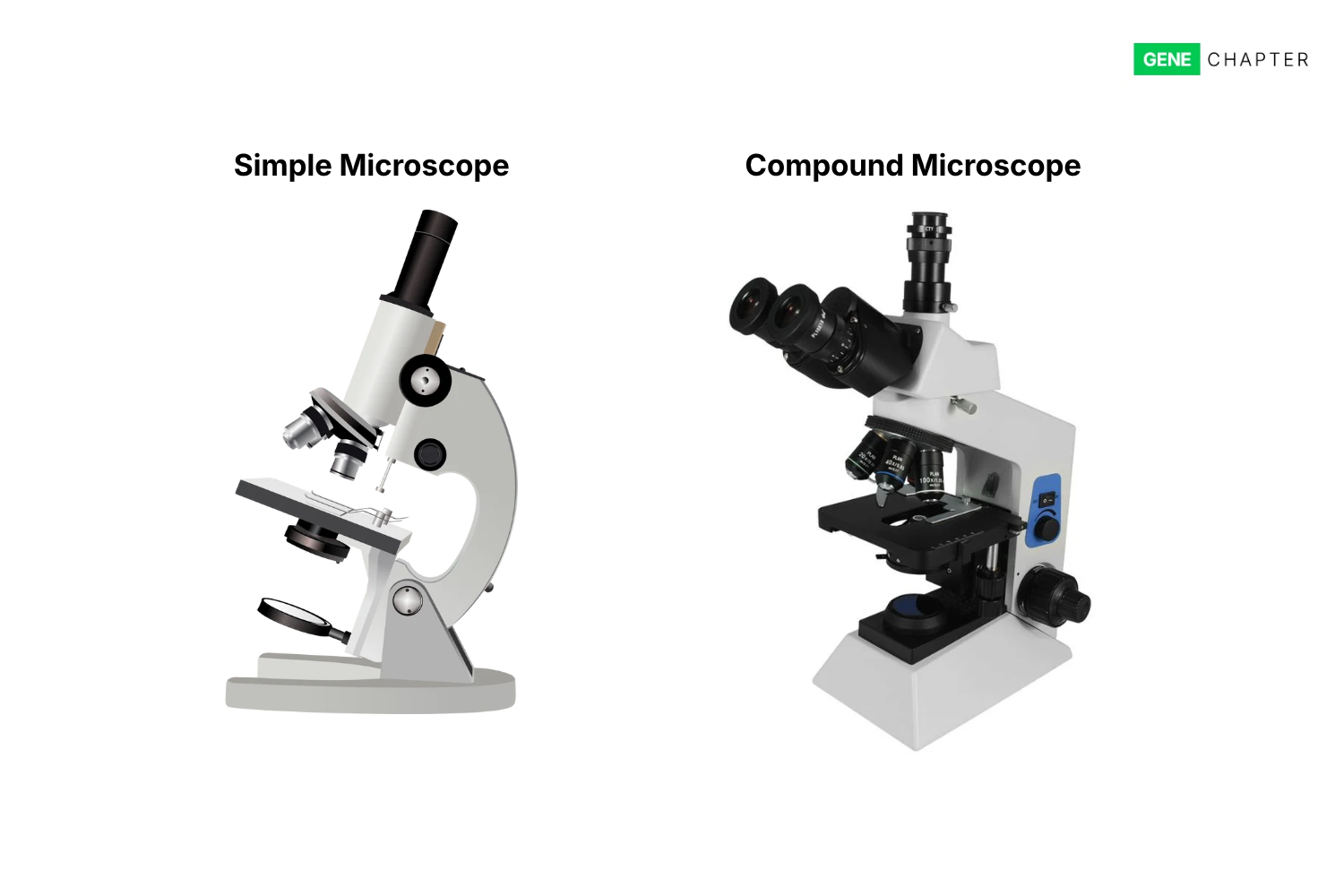
Difference Between Simple and Compound Microscope
In this article, we will discuss what is a simple microscope and compound microscope, and the difference between a simple and compound microscope.
What is a Simple Microscope?
A simple microscope is a basic optical instrument which uses a single convex lens with a short focal length to produce a magnified image of a small object. Simple microscopes use a biconvex lens to magnify the image of a specimen. Most common simple microscopes have a 10x magnification power.
What is Compound Microscope?
A compound microscope is a high power (microscope with higher magnification) microscope that uses more than the lens in the microscope. Typically a compound microscope has objective lenses (usually 4X, 10X, 40X and 100X) and these are further enhanced by eyepiece lens (usually 10X).
A compound microscope uses objective lenses and eyepiece lenses to create a higher magnification - 40X, 100X, 400X and 1000X. A compound microscope is widely considered as one of the standard microscopes that can be used for several general purposes.
Difference Between Simple and Compound Microscope
| Simple Microscope | Compound Microscope |
| Meaning | |
| An optical instrument that uses a single convex lens to produce a magnified image. | An optical instrument that uses two or more lenses to produce a highly magnified image. |
| Lens System | |
| Uses a single convex lens with a short focal length. | Uses an objective lens system and an eyepiece lens. |
| Objective Lens | |
| Does not have a separate objective lens. Single lens performs the magnifying function. | Has one or more objective lenses, commonly 4×, 10×, 40×, and 100×. |
| Eyepiece | |
| The single convex lens is used for viewing and magnification. | Uses an eyepiece lens, commonly 10×, to further magnify the image formed by the objective lens. |
| Magnification | |
| Provides lower magnification compared with a compound microscope. | Provides higher magnification, commonly 40×, 100×, 400×, and 1000×. |
| Illumination | |
| Usually uses natural or external light to illuminate the specimen. | Usually uses a built-in light source to illuminate the specimen. |
| Specimen Preparation | |
| Can be used with relatively simple specimens and may require little preparation. | Usually requires a prepared specimen mounted on a glass slide. |
| Applications | |
| Used for basic observation and magnification of small plant parts, seeds, fibers, insects, and other specimens. | Used to observe plant cells, tissues, microorganisms, and other microscopic structures. |
| Complexity | |
| Has a simple optical design with a single magnifying lens. | Has a more complex optical system with multiple objective lenses, an eyepiece, and other optical components. |